
If you own a home in Olney, you’ve probably seen a chimney take a beating from wet springs, hot summers, and icy winters. We see it every day across Montgomery County. At Sweep Your Chimney DMV, we help homeowners spot problems early, fix them the right way, and keep fireplaces safe and efficient. Here’s what typically goes wrong in our area and how we handle it.
Key Takeaways
- Freeze–thaw cycles and moisture drive the most common chimney issues in Olney homes, causing spalling, cracks, and leaky mortar joints if crowns and caps aren’t maintained.
- Install and size chimney caps correctly, seal or recast crowns, and fix flashing to stop water intrusion, odors, and wildlife entry before they escalate.
- After wood, oil, or gas conversions, fit a properly sized stainless steel liner to prevent acidic condensation, poor draft, and flue damage.
- Schedule an annual NFPA inspection—Level 2 after a fuel change, home sale, or chimney fire—and sweep creosote to reduce smoke, odors, and carbon monoxide risk.
- Act fast on warning signs like efflorescence, stair-step cracks, ceiling stains, or backdrafts so a pro can document issues and recommend repointing or rebuilding for lasting safety.
Why Chimneys in Olney Are Prone to Problems
Local Climate And Freeze–Thaw Cycles
Olney gets plenty of rain and humidity, followed by winter freezes. When water soaks into brick and mortar, it expands as it freezes. That cycle causes spalling, cracking, and loose mortar joints. Left alone, small surface issues turn into leaks and structural problems. We often see this after a few harsh winters when crowns weren’t sealed or caps were missing.
Aging Brickwork And Past Repairs
Many Olney chimneys were built decades ago. Older mortar mixes, quick patch jobs, and mismatched materials don’t stand up to constant moisture. If you’re noticing chalky white deposits on the exterior or sand-like grit falling from joints, the masonry is likely shedding and needs attention. We frequently recommend targeted repointing before damage reaches the interior flue or the firebox.
Mixed-Fuel Appliances And Conversions
Plenty of homes have converted from wood or oil to gas. That’s great for convenience, but gas appliances vent cooler exhaust that condenses in unlined or clay-tile flues. The result is acidic moisture that eats away at tiles and mortar. If the liner size doesn’t match the appliance, draft suffers and moisture problems accelerate. We solve this with proper stainless steel relining sized to the appliance and chimney height.
Masonry Damage: Spalling, Cracks, And Mortar Loss
Freeze–Thaw Spalling And Efflorescence
Spalling looks like brick faces flaking off. Efflorescence shows up as white, powdery salts. Both point to chronic water intrusion. If we catch it early, we apply breathable water repellent, seal small crown cracks, and repoint open joints. If spalling is widespread, sections may need to be rebuilt.
Stair-Step Cracks And Settlement
Stair-step cracks along mortar lines often signal settling or shifting. If the chimney is pulling away from the house, or if you see a lean, it’s time for a structural check. We’ll assess the foundation, the smoke chamber, and the attic framing to determine whether reinforcement or partial rebuilding is needed.
Repointing Versus Rebuilding
- Repointing: Best when bricks are solid but joints are open or crumbly. We remove failing mortar to a proper depth and pack in new mortar matched for hardness and color.
- Partial or full rebuild: Necessary when bricks are soft, spalling is severe, or the chimney has significant movement. We rebuild with correct materials and include proper flashing, crown, and cap so the fix lasts.
Water Intrusion: Crowns, Caps, Flashing, And Wildlife
Cracked Crowns And Washes
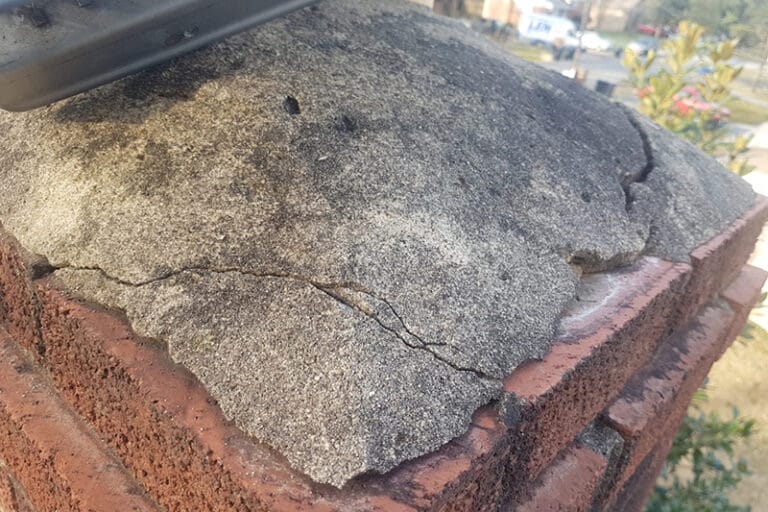
The crown is the concrete or mortar slab at the top that sheds water. Hairline cracks let water soak straight into the chimney. We repair with flexible crown sealants for minor cracking or recast the crown with proper overhang and drip edge when damage is advanced.
Missing Or Undersized Chimney Caps
Caps keep out rain, leaves, and animals. An open flue invites water, odors, and nesting debris. We install stainless steel or copper caps sized to the flue or multi-flue chimney so water and wildlife stay out and sparks stay contained.
Rusted Or Loose Flashing At The Roofline
Flashing seals the gap where the chimney meets the roof. Rusted step flashing, missing counterflashing, or dried-out sealant often shows up as ceiling stains near the fireplace. We replace or re-seat flashing and use the right sealants so the joint stays watertight.
Animal Entry, Nests, And Debris Blockages
Birds, squirrels, and even raccoons can block the flue with nesting materials. That leads to smoke backup, odors, and carbon monoxide risks. We safely remove nests, clean the flue, and fit screened caps to prevent repeat visits.
Flue And Liner Problems That Compromise Safety
Creosote Buildup And Glazed Creosote
Burning wood creates creosote. Light, flaky soot is easy to sweep, but glazed creosote is hard and shiny, and it ignites at lower temperatures. If your fires are smoky or you smell a sharp, tar-like odor, the flue likely needs a professional cleaning. We use the appropriate methods for the type of buildup so we’re not damaging tiles while removing the hazard.
Clay Tile Damage And Metal Liner Deterioration
Cracked or missing clay tiles expose masonry to extreme heat and leak exhaust into the house structure. Older metal liners can rust at seams or corrode from acidic condensation. Video inspection helps us pinpoint failures, then we repair sections or reline with insulated stainless steel for safe venting and better draft.
Incompatible Liners For Gas Or Oil Appliances
A liner sized for a wood stove may be wrong for a modern gas insert. Too large, and you get heavy condensation and weak draft. Too small, and you can push exhaust back into the home. We size liners using appliance specs, flue height, and venting tables to keep performance and safety in line with standards.
Drafting, Odors, And Indoor Air Quality
Smoke Backdrafts And Negative Pressure
Tightly sealed homes, range hoods, and bath fans can pull air down the chimney and push smoke into the room. We look at house pressure, chimney height, and termination location. Solutions range from improving make-up air to adjusting damper settings or adding a top-sealing damper for better control.
Cold Hearth Odors And Summer Smells
Musty or campfire smells in summer usually mean moisture and soot in the flue, or an open damper drawing attic or crawlspace odors into the living room. A thorough sweep, proper cap, and a top-sealing damper often solve this. For gas fireplaces, sulfur or rotten egg smells can be from a gas issue and need immediate attention.
Carbon Monoxide Risks And Alarms
Any blocked, damaged, or incompatible flue can vent CO indoors. If your CO alarm chirps or you feel headaches near the fireplace, stop using the appliance and call us. We’ll inspect, clear the flue, verify combustion air, and confirm proper draft before returning anything to service.
Inspection, Maintenance, And When To Call A Pro
Annual NFPA Inspection Levels
The National Fire Protection Association recommends annual chimney inspections, even if you don’t use the fireplace much.
- Level 1: Visual inspection and basic accessible checks for systems used under normal conditions.
- Level 2: Required after a change in fuel or appliance, a sale of the home, or a known event like a chimney fire. Includes video scanning of the flue and accessible areas in attics and crawlspaces.
- Level 3: Involves removal of components when hidden hazards are suspected. We reserve this for serious damage or safety concerns.
Seasonal Maintenance Checklist For Olney Homeowners
- Inspect and seal crowns if hairline cracks are present
- Confirm cap is secure and correctly sized
- Check flashing for rust, gaps, or loose counterflashing
- Look for efflorescence, spalling, or open mortar joints
- Sweep the flue to remove soot and creosote before the burning season
- Test damper operation and verify smoke chamber condition
- For gas units, verify ignition, pilot, and venting performance
If you’d rather not climb a ladder, we get it. Sweep Your Chimney DMV handles all of this with photo and video documentation so you know exactly what we’re seeing.
Repair Versus Replacement Decisions
We try to preserve original masonry whenever it’s safe and cost-effective. Localized repointing, crown repair, or relining often solves the problem. When a chimney is leaning, bricks are soft throughout, or water damage is widespread, rebuilding sections or the full stack is the right path. We’ll explain options, pricing, and timelines so you can choose with confidence.
Conclusion
Olney chimneys face a perfect storm of moisture, freeze cycles, and aging materials. The good news is that most common chimney issues in Olney homes are preventable with an annual inspection, a proper cap and crown, sound flashing, and the correct liner for your appliance. When repairs are needed, doing them the right way protects your home, your indoor air, and your peace of mind.
We’re local and we work across Montgomery County and the region, including Rockville, Bethesda, Hyattsville, Silver Spring, College Park, Gaithersburg, Elkridge, Ellicott City, Potomac, Chevy Chase, Columbia, Washington, D.C., and Northern Virginia communities like Alexandria, Annandale, Arlington, Vienna, Great Falls, Falls Church, and McLean. If you’re outside these areas, ask us anyway. We often travel where we’re needed.
Ready to solve a leak, strange odor, smoky fire, or a flue concern? Reach out to Sweep Your Chimney DMV. We offer full chimney inspections, sweeping, leak repairs, repointing, relining, and fireplace repairs for both wood and gas systems. If you’re selling or buying a home, we provide the level of inspection you need and clear reports to match.
Call or message Sweep Your Chimney DMV today to schedule service. We’ll handle the dirty work so you can enjoy a warm, safe, worry-free fireplace this season.
Frequently Asked Questions
What are the most common chimney issues in Olney homes?
The most common chimney issues in Olney homes stem from freeze–thaw damage and moisture: spalling bricks, cracked crowns, missing or undersized caps, leaky flashing, efflorescence, creosote buildup, damaged clay tiles or metal liners, drafting problems, odors, and wildlife blockages. Local humidity and winter freezes accelerate minor defects into leaks and safety hazards.
How can I prevent common chimney issues in Olney homes?
Schedule annual NFPA inspections, keep a properly sized cap installed, seal or recast cracked crowns, maintain watertight flashing, repoint open mortar joints early, and ensure the flue liner matches your appliance. Sweep before burning season and address negative pressure to reduce smoke, odors, and moisture-related deterioration.
How do I know if my chimney needs repointing or a rebuild?
Choose repointing when bricks are sound but mortar joints are open or crumbly; failing mortar is removed to depth and replaced with matched mortar. Opt for partial or full rebuild if bricks are soft, spalling is widespread, there’s a lean, or stair-step cracks indicate movement—then rebuild with proper crown, flashing, and cap.
Why do gas conversions cause chimney moisture or liner problems?
Gas appliances vent cooler exhaust, which condenses in unlined or clay-tile flues. The acidic moisture erodes tiles and mortar, and an oversized flue worsens condensation and weak draft. Properly sized stainless steel relining—matched to appliance specs and chimney height—improves draft, reduces moisture, and protects the system.
When is the best time of year to schedule chimney repairs in Olney?
Spring through early fall is ideal. Masonry materials cure better in warmer, drier weather, and you’ll beat the pre-winter rush. Scheduling then allows time for inspections, relining, repointing, or crown work before burning season. Winter emergency repairs are possible, but cold, wet conditions can limit curing and product performance.
How long does a stainless steel chimney liner last, and do I need insulation?
Quality stainless steel liners often last 20 years or more, with many manufacturers offering lifetime warranties when installed per specifications. Insulation is recommended—often required—especially for exterior chimneys. It improves draft, minimizes condensation and acidic corrosion, helps meet clearance-to-combustibles codes, and enhances safety by stabilizing flue temperatures.
