
If you’ve ever noticed a damp smell near your fireplace or spotted water stains on the ceiling around your chimney, you’re already seeing the early warning signs of a bigger problem. Moisture is one of the most destructive forces your chimney faces, and here in the DC metro area, our wet springs, humid summers, and freezing winters create the perfect conditions for water damage to take hold.
At Sweep Your Chimney DMV, we see the effects of moisture damage every day in homes across Rockville, Bethesda, Arlington, Alexandria, and throughout Maryland, Virginia, and Washington, D.C. What often starts as a small crack or a missing chimney cap can turn into thousands of dollars in repairs if left unchecked. The good news? Understanding how moisture damages your chimney over time helps you catch problems early and protect your home before things get serious.
Key Takeaways
- Moisture damages your chimney through rain infiltration, snow accumulation, and condensation—often starting with small cracks or a missing chimney cap.
- The freeze-thaw cycle causes water inside masonry to expand, leading to spalling bricks, crumbling mortar, and potential structural failure over time.
- Warning signs of chimney moisture damage include white chalky deposits (efflorescence), water stains near the chimney, musty odors, and rust on fireplace components.
- Ignoring water intrusion can result in fire hazards, carbon monoxide leaks, mold growth, and costly structural repairs.
- Protect your chimney by installing a chimney cap, sealing the crown, maintaining flashing, and applying vapor-permeable waterproofing treatments.
- Annual chimney inspections are the most effective way to catch moisture damage early and prevent small issues from becoming major problems.
Common Sources of Chimney Moisture
Water finds its way into chimneys through several pathways, and knowing where to look is half the battle. Let’s break down the two most common culprits.
Rain and Snow Infiltration
This one seems obvious, but it’s worth understanding exactly how rain and snow do their damage. Water enters through:
- Missing or damaged chimney caps – That metal cover on top of your chimney isn’t just decorative. Without it, rain pours directly into your flue.
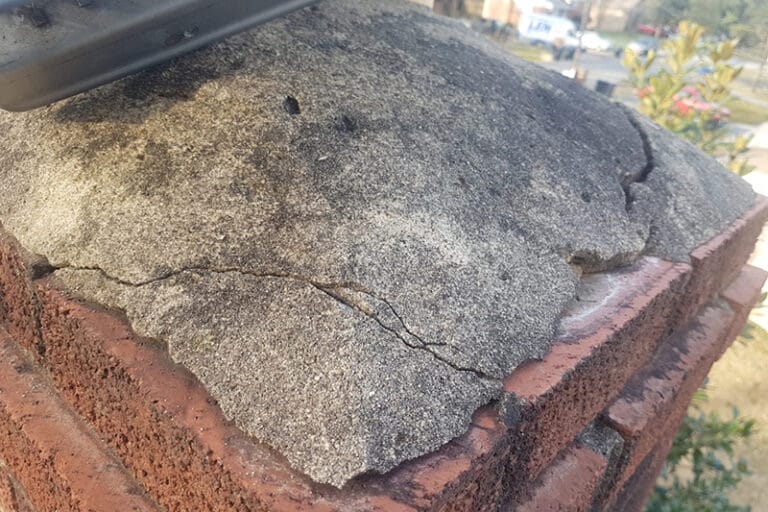
- Cracked chimney crowns – The concrete slab at the top of your chimney develops cracks over time, and water seeps right through.
- Deteriorated mortar joints – Those gaps between your bricks? They’re supposed to be sealed tight. When mortar wears away, water has an open invitation.
- Failed flashing – The metal seal where your chimney meets the roof is a common failure point. When it pulls away or rusts through, water runs down between the chimney and your roof.
Snow creates its own problems. It sits on your chimney crown, melts slowly, and drives water into every crack and crevice. The weight of accumulated ice can also worsen existing damage.
Condensation From Temperature Changes
Here’s one most homeowners don’t think about: moisture forming inside your chimney from temperature differences. When warm, moist air from combustion meets cool flue walls, condensation forms on the liner and masonry surfaces. This is especially common in:
- Oversized or unlined chimneys
- Chimneys attached to energy-efficient, tightly sealed homes
- Flues that aren’t used regularly
That moisture soaks into the bricks and mortar from the inside out, accelerating decay in ways you can’t see until the damage is significant.
How Water Breaks Down Masonry and Mortar
Brick and mortar look solid, but they’re actually porous materials. Water penetrates those tiny pores and starts a slow chemical breakdown.
The lime and cement binders that hold mortar together dissolve when exposed to repeated wetting. Over time, this turns firm mortar joints into soft, powdery material that crumbles at a touch. You might notice sandy residue around your fireplace or find loose mortar pieces on your roof or in your gutters.
Bricks suffer too. As water fills the pores in masonry, the material loses structural strength. The bricks become more vulnerable to mechanical damage and weathering. What was once solid brick starts to feel almost spongy in severe cases.
This process doesn’t happen overnight. It takes years, sometimes decades. But once it starts, it accelerates. Each cycle of wetting and drying weakens the structure a little more, and the damage compounds. A chimney that was perfectly sound ten years ago can become a safety hazard without any obvious external cause.
The Freeze-Thaw Cycle and Structural Damage
If you live in Silver Spring, Gaithersburg, Columbia, Falls Church, or anywhere in our service area, you know our winters involve plenty of freezing and thawing. That cycle is brutal on wet masonry.
Here’s what happens: water absorbed into brick and mortar expands when it freezes. Ice takes up about 9% more space than liquid water. That expansion creates enormous pressure inside the masonry, literally forcing apart the brick faces and mortar joints from within.
When temperatures rise, the ice melts. The water settles deeper into the now-widened cracks. Then it freezes again. And again. Each cycle pushes the damage a little further.
The results are predictable:
- Spalling bricks – The faces of bricks flake off or pop away entirely, leaving rough, exposed surfaces
- Deep mortar cracks – Joints that started with hairline cracks develop into gaps you can fit a finger into
- Crown deterioration – That concrete crown at the top cracks and crumbles, opening more pathways for water
- Structural failure – In severe cases, chimneys can lean, partially collapse, or fail entirely
We’ve seen chimneys in Potomac and Chevy Chase that looked fine from the street but were dangerously compromised from years of freeze-thaw damage. By the time the damage becomes visible, repairs are often extensive.
Warning Signs of Moisture Damage in Your Chimney
Catching moisture damage early saves money and prevents safety hazards. Here’s what to watch for:
Visible masonry problems:
- Spalling or crumbling bricks, especially near the roofline
- Loose masonry pieces on your roof or around the chimney base
- Cracked, missing, or recessed mortar joints
- White, chalky deposits on the brick (called efflorescence) – this is salt left behind when water evaporates
Interior warning signs:
- Water stains or discoloration on walls or ceilings near the chimney
- Peeling paint or wallpaper in rooms adjacent to the chimney
- Damp patches that appear after rain
- Musty or damp odors, especially after wet weather
Fireplace and flue issues:
- Rust on your damper, firebox, or fireplace doors
- Visible leaks or water pooling in the firebox
- Fog or condensation inside the fireplace when burning a fire
- Mold or mildew growth around the hearth
Odor changes:
A properly functioning chimney shouldn’t smell. If you notice foul or musty odors coming from your fireplace, especially when it’s humid or after rain, moisture is likely the cause. The smell often comes from creosote deposits mixing with water or from mold growth inside the flue.
If you’re noticing any of these signs in your home, don’t wait. Contact Sweep Your Chimney DMV to assess the situation before minor issues become major problems.
Long-Term Consequences of Ignoring Water Intrusion
We understand that chimney repairs aren’t always at the top of a homeowner’s priority list. But ignoring moisture damage leads to consequences that are far more expensive and dangerous than catching problems early.
Structural failure
Progressive loss of bricks and mortar doesn’t just look bad. It compromises the structural integrity of your chimney. Chimneys can lean, develop dangerous cracks, or partially collapse. A falling chimney can damage your roof, injure people, or worse. We’ve seen chimneys in Hyattsville, College Park, and throughout the DC area that required complete rebuilding because moisture damage went unaddressed for too long.
Fire and carbon monoxide hazards
When gaps and cracks develop in your chimney liner or masonry, heat can transfer to nearby combustible materials in your walls and attic. This creates a real fire risk. Equally concerning, a compromised chimney may not vent combustion gases properly, allowing carbon monoxide to seep into your living space. CO is odorless and colorless, so you won’t know it’s happening until someone gets sick.
Interior home damage
Water that gets into your chimney doesn’t stay there. It migrates into walls, ceilings, and framing. This leads to:
- Rotting wood structural members
- Damaged drywall and plaster
- Ruined insulation
- Corroded metal components throughout the chimney system
Health concerns
Moisture creates ideal conditions for mold and mildew growth. These can spread into your home’s air system and aggravate allergies, asthma, and other respiratory conditions. The damp, organic environment inside a neglected chimney is basically a breeding ground for problems.
The bottom line: what starts as a small repair often becomes a major project when moisture damage is allowed to continue unchecked.
Effective Ways to Protect Your Chimney From Moisture
The good news is that moisture damage is largely preventable. Here’s how to keep your chimney dry and sound:
Install and maintain a chimney cap
A properly fitted chimney cap with mesh screening keeps rain, snow, and debris out of your flue. It’s one of the simplest and most effective protections available. If you don’t have one, or if yours is damaged or rusted, this should be your first priority.
Repair and seal the crown
Your chimney crown takes a beating from weather exposure. Cracks should be repaired promptly, and crown coatings can provide additional protection against water infiltration.
Maintain your flashing
The flashing where your chimney meets the roof is a common failure point. Inspect it regularly and repair or replace any sections that have pulled away, rusted through, or lost their seal. Poor flashing is responsible for a significant percentage of the chimney leaks we see in homes throughout Ellicott City, McLean, Vienna, and Great Falls.
Address masonry repairs promptly
Don’t ignore deteriorating mortar joints or spalling bricks. Repointing (replacing damaged mortar) and replacing severely damaged bricks stops water from penetrating deeper into the structure.
Consider waterproofing treatments
Vapor-permeable water repellents designed specifically for chimneys can significantly reduce water absorption while still allowing trapped moisture to escape. This is different from regular paint or sealers, which can actually trap moisture inside and make problems worse.
Fix condensation issues
If condensation is a problem, solutions might include installing an appropriate liner, improving flue sizing, adding insulation, or improving ventilation. These issues are best diagnosed by a professional who can assess your specific situation.
Schedule annual inspections
This is the single most important thing you can do. A yearly chimney inspection catches cracks, leaks, and moisture damage early, before small problems become expensive repairs. We recommend scheduling your inspection before the burning season starts so your fireplace is ready when cold weather arrives.
Conclusion
Moisture damage doesn’t announce itself with dramatic failures. It works slowly, quietly, year after year, until suddenly you’re facing a major repair bill or a safety hazard. But with regular maintenance and prompt attention to warning signs, you can keep your chimney in excellent condition for decades.
If you’ve noticed any signs of moisture damage, or if it’s been more than a year since your last chimney inspection, now is the time to act. Our team at Sweep Your Chimney DMV serves homeowners throughout Rockville, Bethesda, Silver Spring, Arlington, Alexandria, Washington D.C., and the entire DMV region. We offer comprehensive inspections, chimney leak repairs, relining services, and everything else you need to keep your chimney safe and functional.
Don’t wait until a small crack becomes a big problem. Give us a call to schedule an inspection, and let us help you protect your home from moisture damage before it gets serious.
Frequently Asked Questions
How does moisture damage a chimney over time?
Moisture damages chimneys through a gradual process. Water penetrates porous bricks and mortar, dissolving the lime and cement binders that hold them together. Over time, this weakens the structure, causing mortar to crumble and bricks to lose strength. The freeze-thaw cycle accelerates this damage as water expands when frozen, forcing apart masonry from within.
What are the warning signs of chimney moisture damage?
Key warning signs include spalling or crumbling bricks, white chalky deposits (efflorescence) on masonry, cracked or missing mortar joints, water stains on walls or ceilings near the chimney, rust on dampers or fireplace doors, musty odors after rain, and visible leaks or water pooling in the firebox.
What is the freeze-thaw cycle and why is it harmful to chimneys?
The freeze-thaw cycle occurs when water absorbed into brick and mortar freezes and expands—ice takes up about 9% more space than liquid water. This expansion creates pressure inside the masonry, forcing apart brick faces and mortar joints. Each freeze-thaw cycle pushes damage deeper, eventually causing spalling, cracks, and structural failure.
How can I protect my chimney from water damage?
Protect your chimney by installing a properly fitted chimney cap, repairing and sealing the crown, maintaining flashing where the chimney meets the roof, addressing deteriorating mortar joints promptly, applying vapor-permeable waterproofing treatments, and scheduling annual chimney inspections to catch problems early before they become costly repairs.
How often should I have my chimney inspected for moisture damage?
You should schedule a professional chimney inspection at least once a year. The best time is before the burning season starts so your fireplace is ready for cold weather. Annual inspections catch cracks, leaks, and moisture damage early, helping prevent small issues from becoming expensive structural repairs or safety hazards.
Can chimney moisture damage cause health problems?
Yes, chimney moisture damage can create health risks. Damp conditions inside a neglected chimney encourage mold and mildew growth, which can spread into your home’s air system and aggravate allergies, asthma, and other respiratory conditions. Additionally, a compromised chimney may allow carbon monoxide to seep into living spaces.
