
Rain should stay on the roof, not end up in your firebox or streaking down your drywall. If you’re noticing stains, musty smells, or a damp hearth, you’re not alone. Chimney leaks are one of the most common issues we diagnose and repair across Maryland, Virginia, and DC. At Sweep Your Chimney DMV, we help homeowners pinpoint the problem fast, explain options clearly, and fix the source so water stays out for good.
Why Chimneys Leak
Chimneys have several places where water can find a way in, and it only takes one weak spot for a leak to show up inside your home. The most common causes include worn or poorly installed flashing where the chimney meets the roof, cracked masonry that absorbs and channels water, a damaged crown that lets rain travel straight into the structure, and missing or undersized chimney caps. Factory-built systems can leak when the chase cover rusts through. Inside the flue, broken or missing liner sections allow condensate to escape and saturate the brick and mortar.
Our weather here is tough on chimneys. Freeze-thaw cycles in the DC metro area expand small cracks into bigger ones, spring storms drive rain under loose flashing, and summer humidity encourages odor and efflorescence. The result is a damp smell, stained ceilings, crumbling mortar, and sometimes active dripping into the firebox. The good news is that each of these problems has a specific repair. Once we identify the source, we can stop the leak and protect the structure.
Signs and Simple Diagnostics
You don’t need to climb the roof to spot early warning signs. A few quick checks can tell you if a chimney leak is likely.
- Brown or yellow stains on ceilings or walls near the chimney chase
- Musty or smoky odors after rain, even when the fireplace is off
- White, chalky deposits on brick (efflorescence) or flaking faces of brick (spalling)
- Peeling paint or wallpaper near the chimney
- Dripping or tapping sounds in the flue during a storm
- Rust on prefabricated firebox panels, damp ash, or a wet damper
One simple test: during a steady rain, shine a flashlight up the flue and around the throat. If you see active drips or track marks, the water path is close by. Still, many leaks aren’t obvious from the ground. A professional inspection from Sweep Your Chimney DMV includes a roof-level assessment, moisture readings, and a camera view of the flue so we can isolate the exact entry point.
Common Causes and How to Fix Them
Failed Flashing and Counterflashing
Flashing is the metal that seals the joint where the roof meets the chimney. If it’s corroded, lifted, or was never installed correctly, water will ride under shingles and leak into the attic or walls. We remove old materials, repair the step flashing, install new counterflashing into mortar joints, and seal with a high-grade, UV-stable sealant. In heavy-snow or wide chimneys, we may add a cricket to shed water.
Cracked or Porous Brick and Mortar Joints
Masonry absorbs water, and cracked joints act like funnels. Over time, that moisture shows up as interior stains and spalling. The fix is tuckpointing with compatible mortar to restore joints, replacing any damaged brick, then applying a breathable masonry water repellent that keeps liquid water out while letting vapor escape. Choosing the right repellent matters so the wall can still dry.
Damaged or Missing Chimney Cap or Spark Arrestor
Without a proper cap, rain falls straight into the flue, saturates the smoke shelf, and rusts the damper. Animals and debris become bonus problems. We size and install stainless steel or copper caps with integrated spark arrestors and screens to block rain and pests while allowing full airflow. A good cap is one of the highest-value upgrades you can make to stop chimney leaks.
Deteriorated or Cracked Crown (Masonry Chimneys)
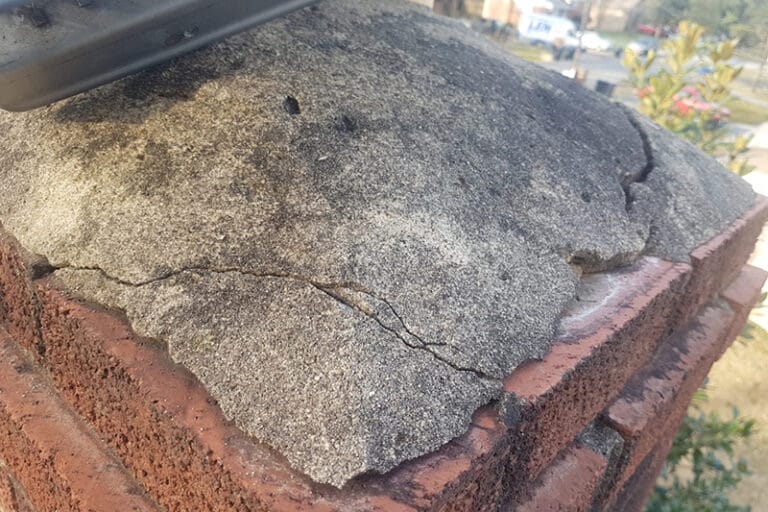
The crown is the sloped concrete lid that protects the top of a masonry chimney. Hairline cracks invite water into the core. Small cracks can be sealed with an elastomeric crown coating. If the crown is crumbling, we rebuild it with proper overhangs and drip edges to shunt water away from the brick. A quality crown reduces freeze-thaw damage and prevents leaks from the very top.
Rotten or Missing Chase Cover (Prefabricated Chimneys)
Factory-built chimneys use a metal chase cover instead of a masonry crown. When these rust through, you’ll see water in the firebox and stained siding. We replace thin, rusted covers with formed stainless steel covers that are cross-broken to shed water and include welded collars around the flue. This is a permanent fix that stops repeated staining and interior leaks.
Flue Liner Defects and Condensation
Clay tile liners can crack or shift, and metal liners can have failed seams. That damage allows moisture and acidic condensate to leak into the masonry. We evaluate draft, size, and appliance type, then install a properly sized stainless steel or cast-in-place liner. Relining improves safety, reduces odor, and stops moisture from migrating through the chimney walls.
Leaky Chimney Shoulder or Cricket Issues
Where a wide chimney meets the roof, water can pool at the uphill side if there is no properly built cricket. Shoulders on step-down chimneys are also frequent entry points. We add a code-compliant cricket and integrate new step flashing and counterflashing. For masonry shoulders, we repair and seal the sloped surface to divert water.
DIY Repairs Versus When to Call a Professional
There are a few safe tasks handy homeowners can take on. Replacing a basic single-flue cap from a ladder, clearing debris from a top-mount cap screen, or applying a temporary bead of exterior sealant to a hairline crack can buy time. Keep in mind that temporary sealants often fail after a season.
Call a pro when the job involves roof work, mortar grinding and repointing, building or repairing crowns, flashing replacement, chase cover fabrication, or flue relining. These repairs require the right materials and techniques for a lasting fix. We also look for hidden pathways, like saturated brick cores or attic-side leaks that are easy to miss from the ground. If you’re anywhere near Rockville, Bethesda, Silver Spring, College Park, Gaithersburg, or Washington, D.C., our team at Sweep Your Chimney DMV can inspect safely and fix the root cause.
Prevention, Upgrades, and Climate Considerations
- Annual inspections and cleanings before burn season. We catch early cracks, loose flashing, and rusted caps.
- Breathable masonry waterproofing every 5 to 10 years to block liquid water while allowing vapor to escape.
- Quality stainless steel caps sized to the flue and crown, not generic one-size fits all covers.
- Proper crowns with overhangs and drip edges on masonry chimneys.
- Stainless steel chase covers for prefab systems to avoid repeat rust failures.
- Correctly sized liners for wood, gas, or oil appliances to reduce condensation.
Our freeze-thaw cycles in Hyattsville, Elkridge, Ellicott City, Potomac, Chevy Chase, Columbia, and across Northern Virginia expand moisture inside masonry. Choosing materials that flex and breathe makes a real difference in how long repairs last. We specify products that are proven in our climate so you’re not paying for the same fix twice.
Costs, Timelines, and Permits
Every home is different, but these ranges will help you budget:
- Basic cap replacement or minor sealing: typically $150 to $500, often completed the same day.
- Flashing repairs or small tuckpointing jobs: usually $400 to $1,500, about 1 to 2 days.
- Crown rebuilds or stainless chase cover replacements: generally $800 to $2,500, 1 to 2 days depending on cure times.
- Relining or structural masonry repairs: $1,500 to $5,000 or more, 2 or more days, and may require permits or inspections.
Local code requirements vary by jurisdiction. In Arlington, Alexandria, Annandale, Vienna, Great Falls, Falls Church, and McLean, relining and major rebuilds may need permits or a final inspection. We handle the details and keep you informed. If you need financing, Sweep Your Chimney DMV offers options to make larger repairs more manageable without delaying needed work.
Conclusion
Chimney leaks rarely fix themselves. The sooner we find the source, the easier and less costly the repair. Whether you’re seeing stains after every storm or just catching a musty whiff on humid days, we can help. Sweep Your Chimney DMV serves homeowners across Rockville, Bethesda, Hyattsville, Silver Spring, College Park, Gaithersburg, Elkridge, Ellicott City, Potomac, Chevy Chase, Columbia, Alexandria, Annandale, Arlington, Vienna, Great Falls, Falls Church, McLean, Washington, D.C., and beyond.
Ready to dry out your chimney and protect your home? Contact Sweep Your Chimney DMV to schedule an inspection and get a clear plan for repair. We’ll diagnose the issue, walk you through options, and get your fireplace back to clean, safe, and cozy.
Frequently Asked Questions
What are the most common causes of chimney leaks?
Chimney leaks usually come from failed flashing, cracked masonry or mortar, a deteriorated crown, missing or undersized caps, rusted chase covers on prefab systems, liner defects, and shoulder/cricket issues. In the DC metro, freeze–thaw cycles and wind‑driven rain worsen small gaps, leading to interior stains, odors, and spalling.
What signs indicate a chimney leak and how can I diagnose it quickly?
Look for brown/yellow wall or ceiling stains near the chase, musty odors after rain, efflorescence, flaking brick, peeling paint, wet ash, rusted prefab panels, and dripping sounds. During steady rain, shine a flashlight up the flue to spot drips or tracks. A pro can confirm with roof inspection, moisture readings, and a flue camera.
What’s the best way to fix chimney flashing, crown, or cap leaks?
For flashing, replace step flashing and add counterflashing sealed into mortar; build a cricket on wide chimneys. For crowns, seal hairline cracks or rebuild with proper overhangs and drip edges. Add a correctly sized stainless or copper cap with spark arrestor. Use breathable masonry water repellents to keep liquid out while letting vapor escape.
How much do chimney leak repairs cost and how long do they take?
Typical ranges: basic cap swaps or minor sealing $150–$500 (same day); flashing repairs or small tuckpointing $400–$1,500 (1–2 days); crown rebuilds or stainless chase covers $800–$2,500 (1–2 days); relining or structural repairs $1,500–$5,000+ (2+ days). Some jurisdictions require permits or inspections for relining and major rebuilds.
Can I use my fireplace if the chimney is leaking?
It’s safer to pause use. Moisture can deteriorate liners, corrode dampers, and cause steam spalling or masonry saturation, increasing fire and carbon monoxide risks. Minor drips often worsen under heat. Have the system inspected, fix the water entry, and verify clearances and draft before resuming operation.
Do homeowners insurance policies cover chimney leaks?
Policies often cover sudden, accidental damage (e.g., storm‑caused flashing failure) but typically exclude wear, rust, or deferred maintenance. Document stains and damage, get a licensed inspection report with photos, and review exclusions and deductibles. Permits or code upgrades may influence coverage; confirm with your insurer before starting repairs.
