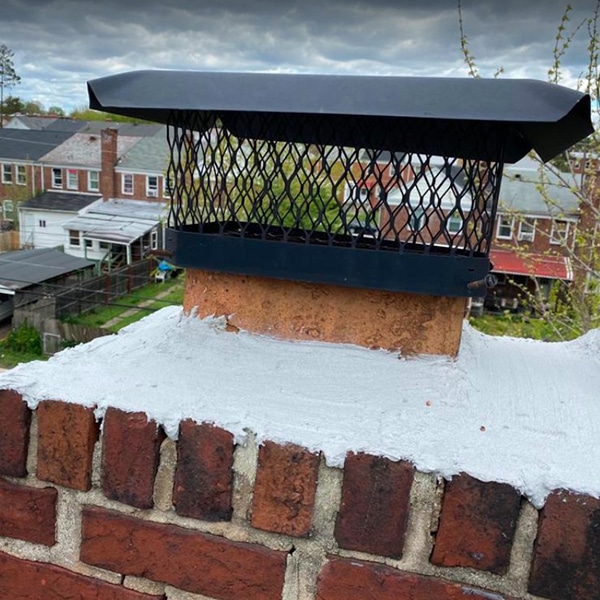
Chimney Cap Materials: What Your Options Are
A chimney cap is a small part with a big job. It keeps rain, snow, animals, and debris out of your flue while letting smoke exit freely. When we replace or install one, the main decision is material.
Galvanized steel is the budget option. It works, but in our humid mid-Atlantic climate it tends to rust within a handful of years. Stainless steel is what we recommend for most homes. It resists corrosion for decades, and most quality stainless caps carry a lifetime warranty. Copper is the premium choice. Beautiful on the right house, ages to a distinguished patina, and outlasts everything else. You pay for it, but it’s the last cap that chimney will ever need. For multi-flue chimneys, unusual dimensions, or historic homes where a stock cap would look wrong, we do custom caps.
A missing or failed cap is one of the most common things we find during inspections, and it’s the leading preventable cause of the chimney leaks and moisture damage we repair. If your cap is gone, every rainstorm is pouring water straight down your flue.
How Cap Pricing Works
Cap cost depends on size, material, and how many flues it covers, so we price it after seeing the chimney. Cap work often gets caught and quoted during a $329 sweep visit or a $279 Level 2 inspection. You’ll have the exact price in writing before we do anything, and simple installations can often happen the same visit.
Common Questions About Chimney Caps
Can a missing chimney cap really cause damage?
Absolutely. An uncapped flue lets rainwater run down the chimney’s interior, where it soaks into masonry, rusts dampers, and speeds up liner failure. It also invites birds, squirrels, and raccoons. Nests are both a blockage and a fire hazard.
What’s the difference between a chimney cap and a chimney crown?
The cap is the metal cover over the flue opening. The crown is the concrete surface on top of the chimney structure itself. They work together. The crown protects the masonry and the cap protects the flue.
How long does a chimney cap last?
Galvanized caps often fail within 5 to 10 years around here. Stainless steel typically lasts decades and usually carries a lifetime warranty. Copper effectively lasts the life of the chimney.
Can you install a cap during a regular sweep visit?
Often, yes. If we’re already on the roof for your sweep or inspection and have a suitable cap for your flue size, we can frequently take care of it the same day.
Rockville’s Cap and Flue Specialists
Family-owned, CSIA certified, and NCSG members, Sweep Your Chimney installs and repairs chimney caps across Maryland, Virginia, and DC. Licensed, insured, and rated 4.9 stars by more than 230 Google reviewers.